

Meet Plinq
Send crypto
with just a tap
Meet Plinq, the simplest way to hand someone crypto in person. Bring two phones together, check the details, confirm — and it's settled on chain.

Meet Plinq, the simplest way to hand someone crypto in person. Bring two phones together, check the details, confirm — and it's settled on chain.

Three steps, and only one of you has anything to do. The person getting paid just needs the app open.

Step one
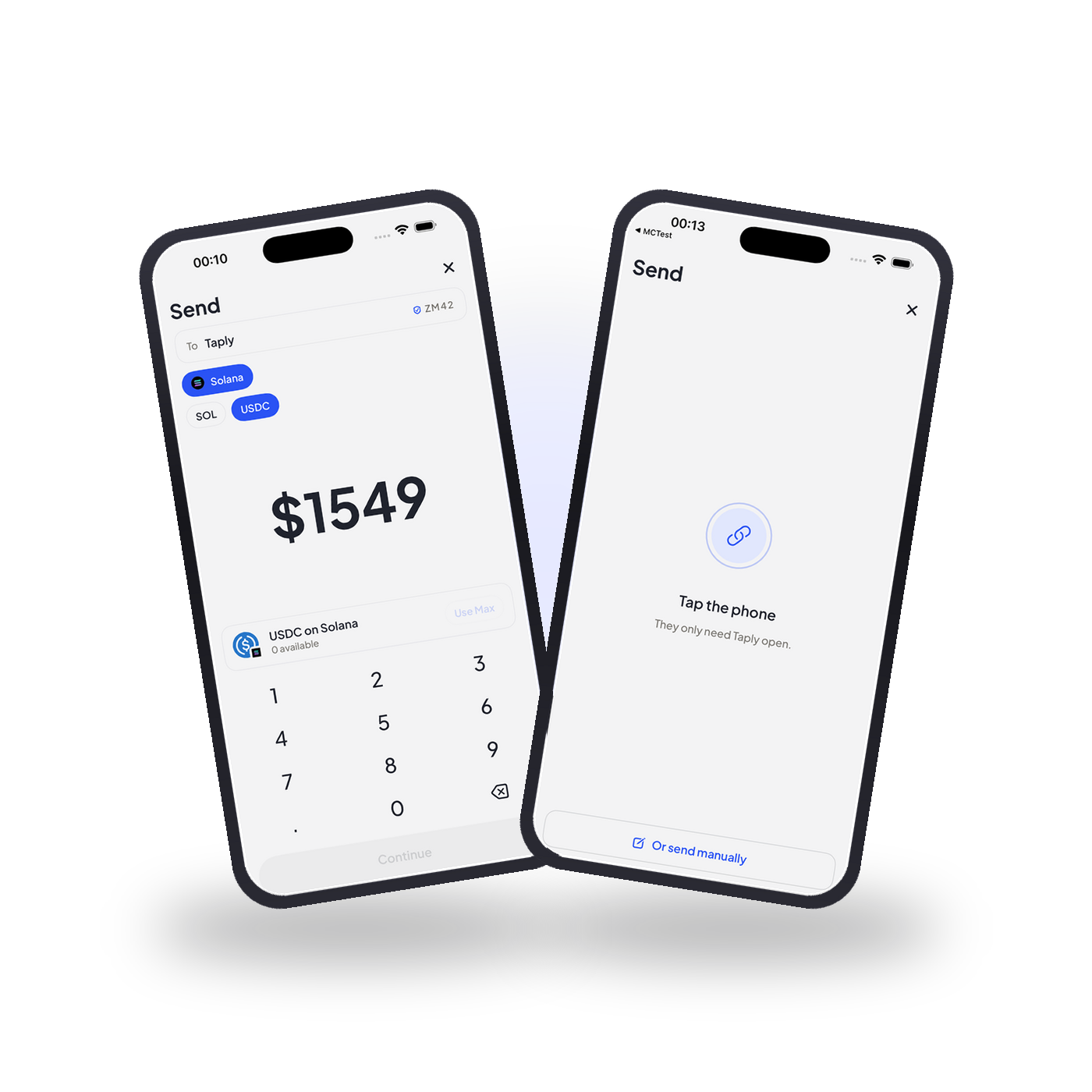
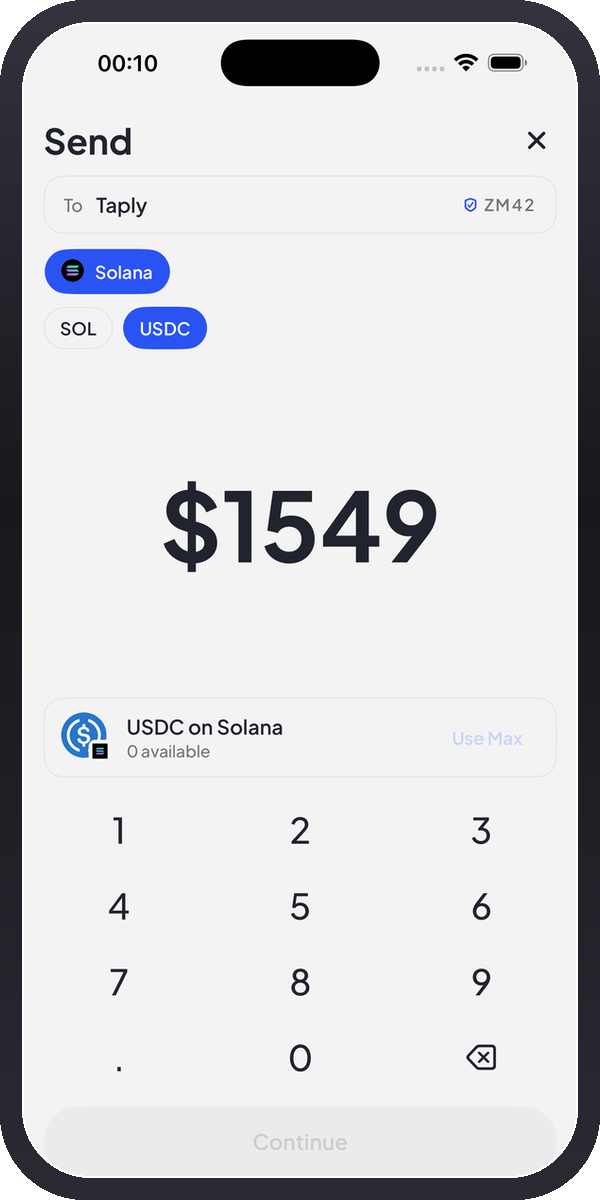
Pick the chain and the token, then type what you’re sending. A short code appears beside their name.

Step two
Both accelerometers spike in the same instant, and Ultra Wideband reads the gap in centimetres. That knock is the whole handshake.

Step three
Check the code against their screen, tap to send, and Robinhood Chain settles it. They never typed anything.
You can now tap two phones together to send crypto in person. No addresses. No QR codes. Just tap, verify and send.
The developer allocation was burned on launch day and the DEX listing was paid. The burn transaction is public.
No CA yetTransfers ran consistently across ETH and ERC-20 tokens on physical devices. Apple asked for additional review information and a full recording of the app running on a device. Everything requested was sent over and the app was resubmitted.
Big day for Plinq. The app went in for review. One step closer to tapping phones and sending crypto for real.
Cash has one advantage crypto never copied. You can hand it to someone. That's it. No links. No usernames. No addresses. No QR codes. We wanted crypto to feel just as natural.
A wallet, a tap, and a receipt. The blockchain is still underneath — it just stops being your problem.

Plinq is the fastest way to pay someone standing in front of you.
Nobody reads out a wallet address, pastes a string, or squints at the first four characters. The two phones exchange it themselves, so there is nothing left to get wrong.
Ultra Wideband measures the distance between the phones in centimetres. The accelerometers confirm the knock. No private APIs, no third-party SDKs, nothing to install.
The exchange between the phones never touches a server. Once you confirm, the transaction is signed on your device and goes straight to Robinhood Chain — ETH or any ERC-20 token — and Blockscout is your receipt.
Four characters beside their name. If it doesn’t match what their phone shows, don’t send.

Handing someone crypto in person has always been a small ceremony of copy, paste and double-check. None of it was ever the point.
The wallet address never leaves either phone by any route you have to trust. It crosses the last four centimetres and nowhere else.
The ones people ask before they trust a tap with their money.
No. That is the entire reason Plinq exists.
The two phones exchange addresses themselves, over an encrypted link, and only once they have physically touched. Nobody reads out 44 characters, nobody pastes anything, and there is no clipboard for malware to swap.
Worth knowing: You never see your own address either, unless you go looking for it in Settings.
ETH, USDG, and any other ERC-20 token in your wallet. You pick it on the send screen before you tap.
No, and it does not need to be. iPhone-to-iPhone card emulation requires an Apple entitlement built for banks, transit operators and ID issuers — not something a peer-to-peer crypto wallet gets handed.
So the tap is reconstructed from two signals that are ordinary public API:
Either signal alone is enough, which is why it still works on phones without a U1 chip.
The attack worth worrying about is address substitution: something in between replaces the recipient address with its own and you pay a stranger. Encryption on its own does not stop that.
So both phones derive a short code from both addresses, the amount and a one-time nonce, and show it beside the recipient’s name. If any of those fields differ between the two devices, the codes stop matching. Same idea as Signal’s safety numbers.
The one rule: Look at the other phone. If the code is not identical on both screens, do not confirm — cancel and tap again.
The tap itself does not. Discovery, the address exchange and the safety phrase all run locally between the two devices, with no server in the middle.
Broadcasting the signed transaction to Robinhood Chain does need a connection — but only on the sender’s phone, and only for that one moment.
Also required: Both apps have to be in the foreground. iOS shuts the local link down in the background, so receiving with the phone in your pocket is not something we can honestly offer.
You do. The keypair is generated on your phone and lives in the Keychain, marked so it never syncs and never leaves the device.
Before you put real money on it: Set up your recovery phrase in Settings. A key that only exists in one Keychain dies with the phone it was on.

The transfer builder was ported line for line to JavaScript and byte-compared against ethers.js building the same transaction — at 1 wei, at 1 ETH, and at the boundaries in between.